How I Balanced My Energy with TCM-Inspired Movement—And Why It Still Works
For years, I struggled with low energy, constant stress, and that nagging feeling of being "off"—despite eating well and hitting the gym. Then I tried a long-term approach rooted in traditional Chinese medicine: gentle, intentional movement tailored to my body’s rhythms. It wasn’t a quick fix, but over time, the shifts were real. This is how a simple daily practice helped me regain balance—and how it might help you too.
The Hidden Problem: Why Modern Workouts Aren’t Always the Answer
In today’s fast-paced world, many people equate health with intensity. The louder the gym music, the heavier the weights, the more sweat on the brow—the better the workout must be. This mindset, while well-intentioned, often overlooks a crucial truth: more is not always better. In fact, for many women juggling family, work, and personal responsibilities, pushing harder can lead to burnout, chronic fatigue, or even injury. The body is not a machine to be driven into exhaustion but a dynamic system that thrives on balance, rhythm, and recovery.
Traditional Chinese Medicine (TCM) offers a different perspective. Rather than measuring health by how many calories are burned or how fast a mile is run, TCM evaluates well-being through the lens of energy flow—known as Qi (pronounced "chee"). According to this ancient system, optimal health arises when Qi circulates freely through the body’s meridians, or energy pathways, and when the internal organs function in harmony. This balance is influenced not only by physical activity but also by emotions, sleep, diet, and environmental factors such as weather and time of day.
One foundational concept in TCM is the Zang-Fu organ system. Unlike the anatomical organs of Western medicine, these are functional units that govern specific aspects of physical and emotional life. For example, the Liver in TCM is responsible not only for detoxification but also for the smooth flow of Qi and emotions. When stressed or overworked, the Liver Qi can become stagnant, leading to irritability, headaches, or digestive discomfort. Similarly, the Spleen governs digestion and energy production, and when weakened by poor diet or overthinking, it can contribute to fatigue and bloating. These systems are deeply interconnected, and imbalance in one can ripple through the entire body.
Modern fitness culture often ignores these subtle connections, promoting one-size-fits-all regimens that prioritize output over insight. A woman in her 40s managing hormonal shifts, parenting demands, and career pressures may find that high-intensity interval training, while effective for some, drains her reserves instead of building them. TCM teaches that long-term wellness is not about pushing through discomfort but about adjusting with awareness. It encourages listening to the body’s signals and responding with care, not force. The goal is not to conquer the body but to cooperate with it.
My Breaking Point: When More Exercise Made Me Feel Worse
I learned this lesson the hard way. For over a decade, I followed what I believed was a healthy routine: early morning runs, evening strength training, and weekend spin classes. I tracked my steps, counted macros, and prided myself on consistency. Yet, by my mid-40s, I began to notice troubling changes. I was tired all the time, even after eight hours of sleep. My immune system seemed weaker—I caught every cold that went around the office. My digestion became unpredictable, and I found myself snapping at my children over small things. I wasn’t injured, but I felt fragile, like a wire stretched too tight.
It wasn’t until a persistent bout of insomnia sent me to a licensed TCM practitioner that I began to reconsider my approach. After a detailed consultation that included examining my tongue, checking my pulse at multiple points on the wrist, and discussing my sleep, digestion, and emotional state, she offered a surprising recommendation: I needed to do less, not more. Instead of adding another workout or supplement, she advised me to pause intense exercise and begin with just ten minutes a day of gentle movement—specifically Qigong, a form of mindful physical practice rooted in TCM.
At first, I was skeptical. How could standing still and breathing slowly restore what years of rigorous training had not? But the practitioner explained that my symptoms—fatigue, poor sleep, irritability—were signs of Qi deficiency and Liver Qi stagnation, common in women under chronic stress. My body wasn’t lacking effort; it was lacking recovery. The constant exertion had depleted my energy reserves, disrupted my nervous system, and thrown my internal rhythms out of alignment. What I needed wasn’t more stimulation but restoration—activities that would calm the nervous system, improve circulation, and support organ function without strain.
That conversation marked a turning point. I began to shift from a "no pain, no gain" mentality to one centered on listening, responding, and restoring. I replaced my early runs with slow, flowing movements in the backyard. I stopped timing my workouts and started paying attention to how I felt during and after. Within weeks, I noticed subtle improvements: I fell asleep more easily, my digestion stabilized, and my mood became more even. The change wasn’t dramatic, but it was real—and sustainable.
The Core Idea: Movement as Medicine in TCM
In Traditional Chinese Medicine, movement is not seen as a means to burn calories or build muscle mass. Instead, it is viewed as a form of medicine—a way to regulate Qi, unblock stagnation, and strengthen the body’s natural healing capacity. The goal is not to exhaust but to energize, not to compete but to harmonize. This philosophy underpins practices like Tai Chi, Qigong, and Dao Yin, all of which emphasize slow, intentional motions coordinated with breath and awareness.
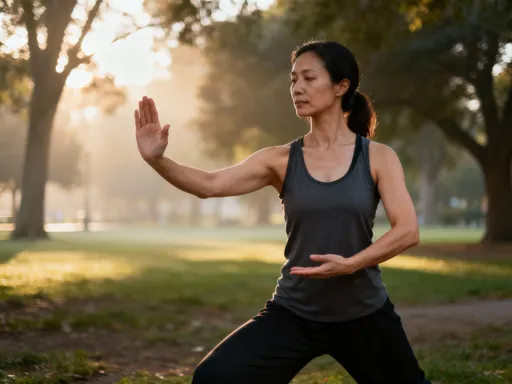
Tai Chi, often described as "meditation in motion," consists of a series of flowing postures that improve balance, flexibility, and mental focus. Qigong, which translates to "life energy cultivation," includes both dynamic movements and static holds designed to open meridians and enhance Qi flow. Dao Yin, an ancient precursor to both, combines stretching, breathing, and visualization to release tension and support organ health. These practices are not aerobic in the conventional sense, but they deeply influence the body’s internal environment.
One of the key principles in TCM is that each organ system is associated with a specific meridian, and each meridian is most active during a two-hour window in the 24-hour cycle. For example, the Lung meridian is strongest between 3 a.m. and 5 a.m., while the Stomach meridian peaks between 7 a.m. and 9 a.m. This understanding informs when and how movement should be practiced. A short Qigong session in the morning can support Lung function and set a calm tone for the day, while gentle abdominal breathing at night may aid digestion and prepare the body for rest.
Equally important is the idea of consistency over intensity. Unlike a high-intensity workout that delivers a temporary surge of endorphins, TCM-inspired movement works gradually, like a slow-cooked stew that develops flavor over time. Practicing for just 10 to 20 minutes a day, with attention and regularity, can lead to profound shifts in energy, mood, and resilience. The benefits are not always immediate, but they accumulate, creating a foundation of stability that supports long-term well-being.
Building a Sustainable Routine: My 6-Month TCM Movement Plan
Transitioning from high-intensity exercise to gentle movement required patience and structure. I knew that without a clear plan, it would be easy to dismiss the practice as too subtle to matter. So, I designed a six-month program that allowed for gradual adaptation, mindful observation, and sustainable integration into daily life.
The first month was about reacquainting myself with stillness and breath. I began each morning with a 10-minute Qigong routine focused on grounding and awakening energy. The movements were simple: lifting the arms slowly overhead, shifting weight from foot to foot, and rotating the wrists and ankles. What made the difference was the attention to breath—inhaling as I rose, exhaling as I lowered. I practiced in natural light, ideally before breakfast, to align with the body’s natural rhythm. By the end of the fourth week, I noticed I was less groggy in the mornings and more present during the day.
Months two and three introduced midday practices tailored to meridian flow. I learned that certain stretches, when done at specific times, could support organ function. For example, a gentle side bend while standing was said to stimulate the Liver and Gallbladder meridians, helping to release emotional tension. I incorporated these into my lunch break, doing three to five minutes of targeted stretching after eating. I also began to adjust my routine based on weather and mood. On cold, damp days, I focused on movements that warmed the body, such as circular joint rotations. On stressful days, I added longer exhalations to calm the nervous system.
By months four through six, the practice had become a natural part of my day. I added slow, meditative walking—about 1,000 steps taken with full awareness of each movement and breath. I coordinated my steps with my breathing, inhaling for three steps, exhaling for three. I also began to explore seated Qigong, where I would sit quietly and visualize energy moving through my body. During this phase, I kept a simple journal to track changes. I didn’t expect dramatic transformations, but the subtle shifts were meaningful: I slept more soundly, my skin appeared clearer, and I felt more emotionally balanced. I wasn’t chasing energy—I was cultivating it.
What Science Says: Where TCM Meets Modern Research
While TCM has been practiced for thousands of years, modern science is increasingly validating its principles, particularly in the realm of mind-body medicine. Numerous studies have examined the effects of Qigong and Tai Chi on physical and mental health, with results that support their role in promoting long-term wellness.
Research published in the Journal of Alternative and Complementary Medicine has shown that regular Qigong practice can significantly reduce levels of cortisol, the primary stress hormone. Elevated cortisol is linked to a host of health issues, including weight gain, sleep disturbances, and weakened immunity—all concerns for women navigating midlife transitions. By lowering cortisol, mindful movement helps the body shift from a state of chronic stress to one of restoration.
Other studies have demonstrated improvements in balance, flexibility, and immune function among older adults who practice Tai Chi regularly. A 2020 meta-analysis in BMC Geriatrics found that participants who engaged in Tai Chi for 12 weeks or more showed enhanced immune response, including increased levels of natural killer cells, which play a critical role in fighting infection. These findings are particularly relevant for women over 40, whose immune systems may naturally decline with age.
From a neurological perspective, slow, rhythmic movement has been shown to activate the parasympathetic nervous system—the branch responsible for "rest and digest" functions. Unlike high-intensity exercise, which triggers the sympathetic ("fight or flight") response, practices like Qigong encourage the body to downshift, allowing for deeper recovery. This shift supports better digestion, improved heart rate variability, and enhanced emotional regulation—all markers of long-term resilience.
It is important to emphasize that these practices are not substitutes for medical treatment. They do not claim to cure disease or replace prescribed therapies. Rather, they serve as complementary tools that support the body’s innate ability to heal and maintain balance. When used alongside conventional care, they can enhance overall quality of life, especially for those managing chronic stress, fatigue, or age-related changes.
Common Mistakes and How to Avoid Them
One of the most common pitfalls in adopting TCM-inspired movement is approaching it with the same mindset used for conventional fitness. Women accustomed to tracking reps, calories, or workout duration may expect rapid results and become discouraged when changes are subtle. The truth is, this practice is not about achievement but alignment. Progress is measured not by how much you do but by how you feel over time. Impatience can lead to overexertion, defeating the very purpose of gentle restoration.
Another mistake is ignoring the body’s signals. TCM emphasizes adaptation—what works on a sunny morning may not be right on a rainy afternoon. Practicing the same routine regardless of energy level, weather, or emotional state can create imbalance rather than correct it. For example, vigorous movements on a day of fatigue may further deplete Qi, while overly passive practice during a period of stagnation may fail to stimulate flow. The key is responsiveness: adjusting intensity, duration, and type of movement based on daily conditions.
Some also make the error of practicing in stressful environments—rushing through a Qigong sequence while distracted by a phone or doing stretches in a noisy, cluttered space. TCM places great importance on the environment as a reflection of internal state. A calm, quiet setting supports deeper focus and better energy circulation. Even five minutes in a peaceful corner of the home can be more beneficial than twenty minutes in a chaotic one.
Finally, while many resources are available online, it is wise to seek guidance from a qualified practitioner when beginning or modifying a health routine. A licensed TCM provider can assess individual constitution, identify patterns of imbalance, and recommend appropriate practices. This personalized approach ensures safety and effectiveness, especially for those with existing health concerns.
Making It Last: Turning Practice into Lifestyle
The most profound changes I experienced did not come from any single session but from the accumulation of small, consistent actions. Wellness, as I’ve come to understand it, is not a destination but a daily practice of alignment. Just as brushing your teeth prevents decay, daily mindful movement prevents energetic stagnation. It becomes less of a "routine" and more of a rhythm—a natural part of how you move through the day.
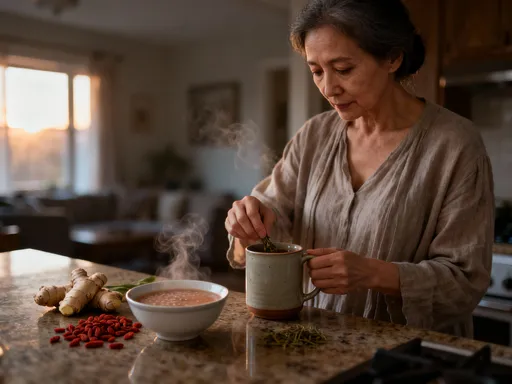
Over time, I began to pair my movement practice with other TCM-aligned habits. I paid closer attention to hydration, drinking warm water throughout the day to support digestion. I prioritized rest, honoring the body’s need for stillness. I adjusted my diet according to the seasons—eating warming, cooked foods in winter and lighter, cooling options in summer. These choices, when combined with gentle movement, created a holistic system of care that felt both intuitive and sustainable.
Perhaps the most valuable lesson has been the importance of patience. Healing and balance do not follow a linear timeline. There are days when energy feels abundant and others when rest is needed. The practice is not about perfection but presence—showing up, listening deeply, and responding with kindness. In a culture that often demands speed and productivity, this slow, steady approach has been revolutionary.
Today, more than two years since I began, my energy is more stable, my stress is manageable, and I feel more connected to my body than ever before. I no longer chase wellness; I live it. And if there’s one thing I hope other women can take from this journey, it’s that sometimes, the most powerful changes come not from pushing harder, but from moving with greater awareness, care, and respect for the wisdom already within you.